
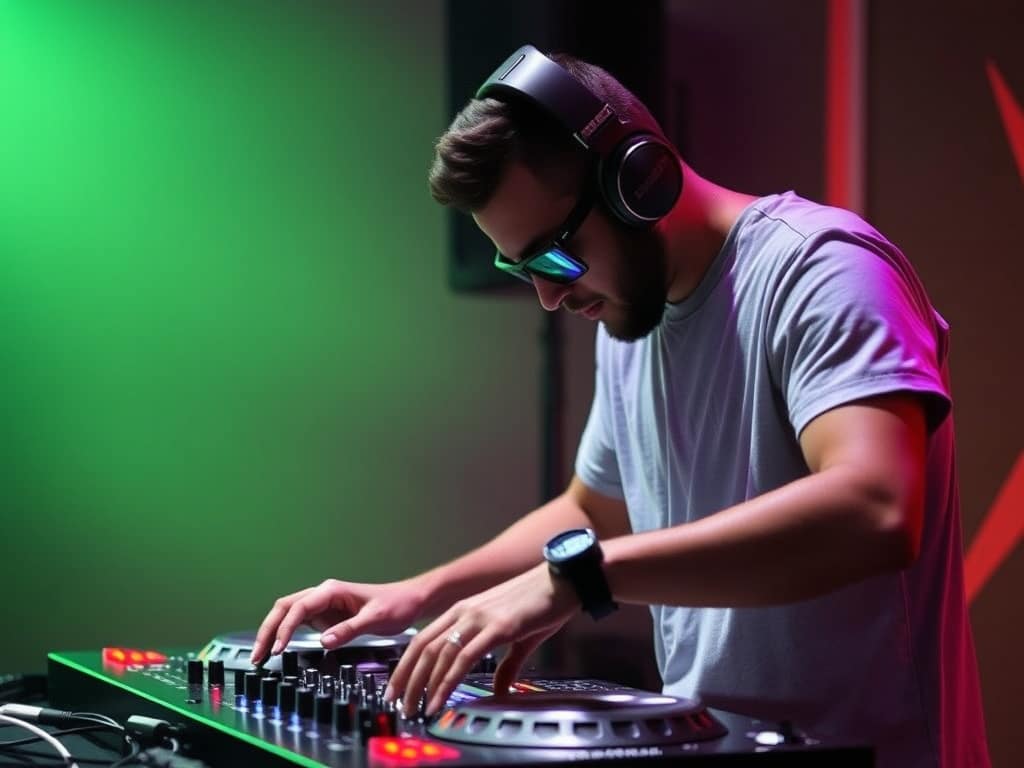
🎵 What Is Beatmatching?
Before diving into whether it’s still essential, let’s get clear on what beatmatching actually is.
Beatmatching is the art of aligning the tempo (BPM) and phase (the beat position) of two tracks so they play in sync. Traditionally, DJs did this by ear using pitch sliders, jog wheels, and a sharp sense of rhythm — a true skill that separated amateurs from professionals.
It’s what made early legends like Carl Cox, Jeff Mills, and Sasha household names among DJs — their ability to seamlessly blend tracks and keep a crowd locked into a groove for hours.
⚙️ The Modern Shift: Enter the Sync Button
Fast forward to today — modern DJ software and hardware like Rekordbox, Serato, and Traktor come with the Sync button, which automatically matches BPMs and aligns beats for you.
It’s undeniably convenient.
No more stressing about tempo drift. No more manually nudging jog wheels to line up kicks and snares.
This has led to an ongoing debate in the DJ community:
“If the software can do it for you, do you still need to learn beatmatching?”
🎧 The Case For Learning Beatmatching
Even with all the tech available, there are strong reasons why learning to beatmatch manually still matters — especially if you want to grow into a confident, versatile DJ.
1. It Builds a Deeper Understanding of Music
Learning to beatmatch trains your ears and helps you feel rhythm, tempo, and phrasing. You’ll naturally start recognising song structures, drops, and energy shifts — crucial skills for professional mixing.
2. It Improves Your Timing and Flow
When you know how to sync by ear, you’re more in control. If the Sync function fails (and trust us, sometimes it does!), you can jump in and correct it effortlessly. That reliability can save your set.
3. It Teaches Discipline and Confidence
Manual beatmatching builds patience and focus. It’s the DJ equivalent of learning to drive a manual car — even if most people drive automatics now, understanding the mechanics gives you more control and respect for the craft.
🚀 The Case Against Manual Beatmatching
Let’s be fair — the Sync button exists for a reason. Many top DJs use it, and it’s not necessarily “cheating.”
1. Technology Frees You to Focus on Creativity
When the software handles beat alignment, you can focus on song selection, effects, EQing, loops, and crowd interaction — the creative elements that make a performance unique.
2. It Reflects the Evolution of DJing
DJing has always evolved alongside technology — from vinyl to CDJs to digital controllers. Refusing to use Sync is like refusing to use USBs instead of crates of records. It’s not about rejecting progress; it’s about embracing what serves your performance.
3. Crowds Don’t Care How You Sync — They Care How You Sound
Ultimately, audiences aren’t judging whether you matched beats manually. They care about the vibe, track selection, and flow of your set. If Sync helps you deliver that consistently, then it’s a tool worth using.
💡 So, Is Beatmatching Still Relevant?
Absolutely — but for different reasons than before.
At our Online DJ Academy, we teach both traditional and modern DJing techniques because they complement each other.
-
Manual beatmatching sharpens your ears, rhythm, and confidence — the foundations of good mixing.
-
Sync technology lets you focus on creative expression and live performance.
The best DJs in today’s world understand both. They can mix by ear and take advantage of modern tools to push their sets further.
🎓 Final Thoughts
Beatmatching isn’t a relic of the past — it’s a rite of passage.
Even if you don’t use it every time, mastering it gives you a deeper connection to your music and a level of control that separates hobbyists from professionals.
At [Your DJ Academy Name], we believe in teaching the complete craft of DJing — from the old-school skills that built the industry to the cutting-edge tech shaping its future.
👉 Ready to learn beatmatching the right way — and use Sync like a pro?
Explore our Complete DJ Training Course and start mixing with confidence today.