
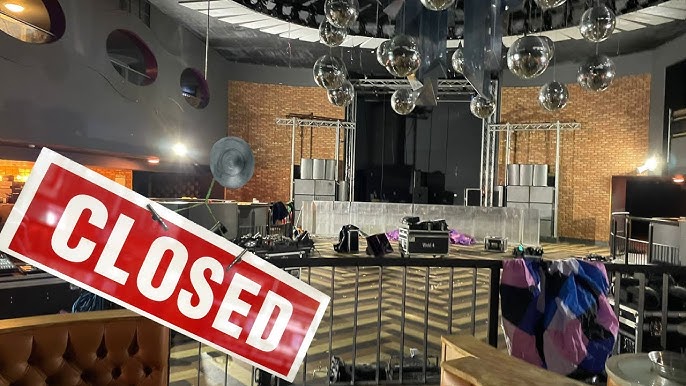
As a follower of DJMasteryCourses.com, and as a new DJ with a possible interest in a career you’ve probably felt the tension in the scene: the idea of the nightclub DJ is still iconic… but the number of actual club opportunities (especially in parts of the UK where we are based) can feel like it’s shrinking in real time.
So let’s talk about it properly — not as doom-and-gloom, not as blind optimism — but as a real discussion:
Are nightclubs finished in 2025?
And if the UK keeps losing venues, what does the next five years look like for aspiring club DJs?
The UK in 2025: a real squeeze, not just “changing tastes”
The UK’s late-night industry has been under sustained pressure post-pandemic, and the data coming out of industry bodies is blunt.
Recent reporting linked to NTIA figures describes a sharp contraction since 2020 — nearly 800 late-night venues gone and a 26.4% decline, with closures accelerating in 2025. The Guardian
The NTIA has also warned that many towns now have no nightclub at all, and some areas are becoming “night-time deserts.” NTIA+1
On top of that, UK hospitality businesses have been flagging rising costs and tax pressure, including business rates changes that many operators say will push venues closer to the edge. The Guardian
Put simply: even when crowds want nightlife, the economics of keeping doors open have become harder.
Is this just the UK? Not exactly — but the reasons vary
Across “first world” nightlife markets (big cities, established scenes), you see a similar pattern: the club isn’t always dying — it’s often being outpriced, regulated, or reshaped.
Berlin: the cultural capital feeling the rent pressure
Berlin’s club story is basically a warning label for every city: as rents rise and neighbourhoods gentrify, nightlife spaces get squeezed. The Guardian has reported on the commercial pressure, rent rises, and the fear that the scene is losing the conditions that made it special in the first place. The Guardian+2The Guardian+2
Canada: “nightlife policy” exists… but venues still struggle
Montreal is a good example of a city trying to treat nightlife like cultural infrastructure — but even with policy attention, independent venues can remain financially vulnerable. The Main
US cities: the venue economics are getting brutal
In major US markets, the story often comes down to rent + insurance + consumer habits. Reporting summaries referencing New York City closures point to rising fixed costs and changing drinking habits among younger audiences as a factor in venue viability. Hospitality Design+1
Separately, Reuters has noted consumers trading down in bars/nightclubs — not a nightclub article per se, but it reflects cost sensitivity that hits venues hard. Reuters
Australia: reforms can help, but policy doesn’t magically create a vibe
Even where governments try to stimulate nightlife (planning reforms, licensing tweaks), it can still be a grind if cost-of-living makes nights out feel like a luxury. As one line put it: policy alone doesn’t create a vibe. The Guardian
The global picture: clubs aren’t universally “over,” but many scenes are becoming more concentrated into fewer venues, often in the biggest cities, backed by stronger operators, with higher ticket prices.
The bigger shift: what young people want from a night out is changing
Here’s the part DJs sometimes miss: this isn’t only about taxes and rent. Culture is shifting too.
Across Europe, there’s growing attention on alternatives to the traditional 1am-to-4am booze-heavy club model: daytime parties, alcohol-light events, and community-first gatherings are rising in visibility. EL PAÍS English+1
And even the “phones on the dancefloor” debate shows clubs experimenting with phone-free policies to make the experience feel special again. MusicRadar
This matters because if the 18–25 crowd changes how they socialize, venues adapt — or disappear.
If nightclubs vanish in the next 5 years… what will 18–25s do instead?
Let’s run the thought experiment the way your students probably worry about it.
If traditional clubs keep declining, nightlife doesn’t just switch off — it migrates:
-
Day parties and early-finish events
Think: “dance, socialise, home by midnight.” This fits wellness culture, cost-of-living, and safer transport. -
Pop-up/temporary venues & warehouse-style events
Less overhead than permanent clubs, more “you had to be there” energy. -
Experience-first venues
Hybrid spaces that mix music with activities, food, visuals, themed nights — basically “club energy” without being a pure nightclub. -
House parties and micro-scenes
Smaller rooms, better community vibe, lower spend — especially if city-centre nights feel expensive and homogenous. EL PAÍS English -
Festivals and ticketed event culture
For some people: fewer nights out, but bigger “main character” events when they do go.
So the demand for DJs doesn’t disappear — but the shape of demand changes.
So… is aspiring to be a nightclub DJ a short-lived dream?
Here’s the honest answer:
In some towns, yes — the “local club ladder” is breaking
If your area has lost its venues, you can’t do the classic progression of:
open decks → warm-up slot → regular support → resident DJ
That pathway is exactly what closures damage. The Guardian+1
But in cities and strong scenes, “club DJ” is becoming a more elite lane
Fewer rooms can mean:
-
more competition for slots
-
higher standards
-
stronger emphasis on your brand / online momentum
-
a need for real audience pull
So it’s not a dead dream — it’s a harder, more competitive one, and it increasingly rewards DJs who can bring more than “I can mix.”
What this means for DJMasteryCourses students: how to future-proof your DJ path
If you’re starting in 2025, the move is not to abandon the nightclub dream — it’s to expand the target.
1) Train for venues, not just nightclubs
Bars, lounges, day parties, private events, pop-ups — these are all real performance opportunities.
2) Build an online footprint that makes promoters take you seriously
-
Record mixes consistently
-
Post highlights (30–60 sec clips)
-
Keep a pinned “best mix” and a short bio
Promoters and owners want confidence you can deliver.
3) Network like it’s part of practice
Because it is. Showing up, supporting nights, being known as reliable and easy to work with is often what gets the first “can you cover this slot?” message.
4) Diversify your income and your identity
In a contracting venue market, being “only a nightclub DJ” is fragile. The DJs who thrive do multiple things:
-
gigs + content
-
events + mixes
-
brand + community
If this does not affect you as you are purely a mobile DJ and your diary is sufficiently full then it may not be a worry for your income- stream , however it isn't too late for club djs to adapt and become a mobile dj - our course teaches the skills required to promote your business and get those bookings so check out more details here!