
Music Structure and Theory for DJs
Music is more than just sounds and beats — it’s a story made up of parts that come together like a puzzle. For DJs, knowing how that story is built helps make every mix smooth, exciting, and enjoyable for the crowd. This lesson dives deep into the building blocks of music, like beats, bars, phrases, and sections such as intros, verses, choruses, bridges, and drops. Understanding these pieces gives you the power to control the energy, mood, and flow of your DJ sets.
Imagine music as a pulse or heartbeat guiding dancers on the floor. That heartbeat is made up of beats and bars, grouped into phrases that tell the song’s story step by step. As a DJ, learning to count these beats and spot phrases means you can mix songs at the perfect moments. This makes your transitions smooth, so the crowd can keep dancing without feeling a break or sudden change in rhythm.
But music is more than just timing. There’s also tempo, measured by beats per minute (BPM), which decides how fast or slow the song feels. Pairing songs with similar tempos keeps the energy steady, while knowing when and how to shift tempos carefully keeps the party moving naturally. Plus, understanding time signatures helps you match the rhythm patterns so songs fit together like pieces of a puzzle.
Then there’s something called harmonic mixing, where you match songs by their musical key. Just like colours that look great together, songs that share or have compatible keys blend beautifully without clashing sounds. DJs use special tools to detect keys and plan mixes that harmonize, making the music sound more professional and pleasing to the ear.
The energy of a song also changes over time. Some parts pump up the crowd with beats and bass, while others calm things down with soft melodies or breakdowns. By recognizing these shifts, DJs can ride the waves of energy – building excitement, then giving the crowd a moment to rest. Knowing when to mix during a breakdown, a build-up, or a drop lets you control the mood perfectly.
Every track tells a story through different sections — like an intro that sets the stage or a chorus that brings the energy high. Spotting these moments helps you know the best times to blend one song into another. For example, mixing during a bridge can be smooth because it’s usually quieter, while mixing drops together keeps the excitement at its peak.
Finally, practicing song analysis sharpens your skills. By listening closely, counting beats and bars, marking changes in energy, phrasing, and moods, you can prepare for better mixes. Creating mini-sets to test how songs flow together and learning to trust your ear without relying only on visual aids builds confidence for live performances.
This lesson is designed to help beginner DJs of any age learn the language of music so you can master your craft. By understanding how songs are made and how to use that knowledge in your DJing, you’ll create mixes that feel like an exciting journey, keeping your crowd happy and dancing all night long.
Understanding Beats, Bars, and Phrasing
Have you noticed how music feels like it has a heartbeat? That heartbeat is made up of beats and bars, and understanding these helps DJs mix songs smoothly. Think of beats, bars, and phrasing as the building blocks that make music flow like a story.
1. The Basics: Beats and Bars
A beat is the smallest unit of time in music. Imagine the tick-tock of a clock—each tick is like a beat. In most dance music, beats are steady and easy to count. For example, in popular music styles like house or techno, the beat usually follows a 4/4 pattern. This means you count four beats in every bar.
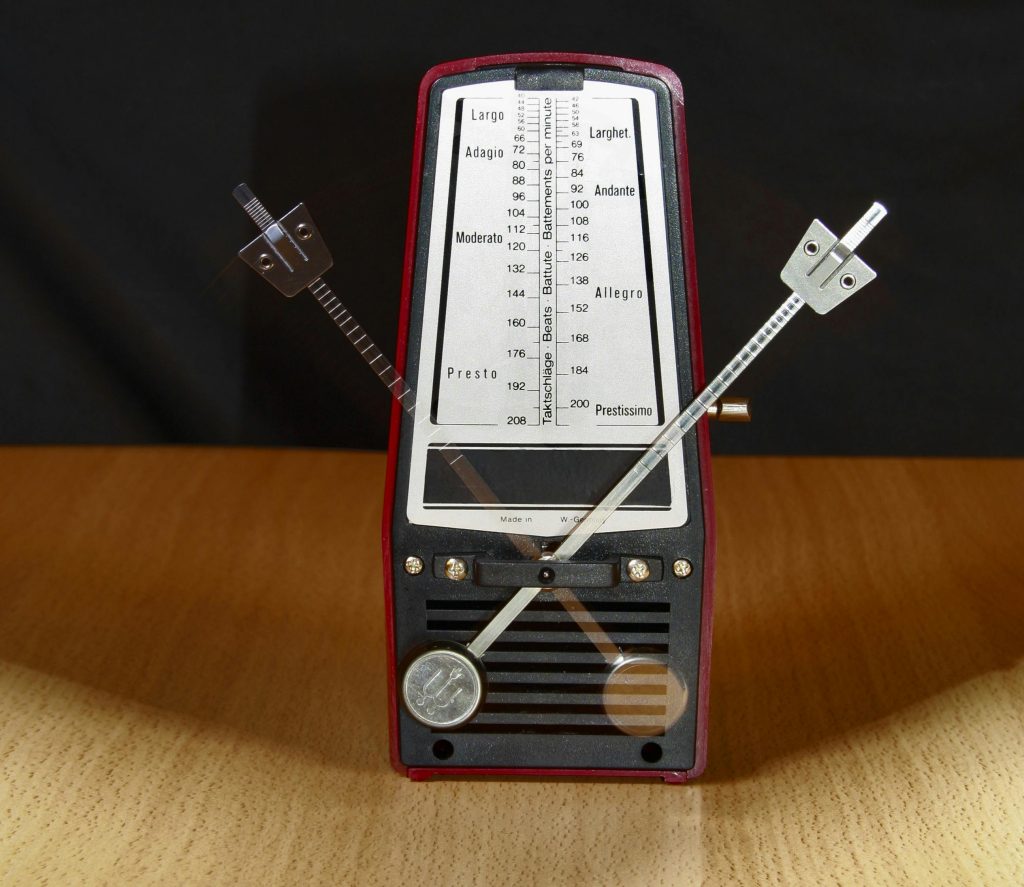
A bar (or measure) groups these beats together. If you count “1, 2, 3, 4,” that’s one bar. Bars help DJs keep track of timing in a song to know where to start mixing a new track. It’s like reading a page of a book, where each bar is a line you can follow.
For example, if you listen closely to a house track, you will hear four beats, then the pattern starts again. DJs use this pattern to make sure the music stays in sync when they switch from one song to the next.
2. Why Phrasing Matters in DJ Mixing
Phrasing groups bars into bigger chunks, usually in sets of 8 bars. This means 8 bars x 4 beats each = 32 beats make one phrase. Phrases are like paragraphs in a story, where something important often changes, like a new vocal or drum beat.
Most dance tracks have phrases lasting 32 beats. When DJs mix two songs, they try to start the new track at the same point in the musical phrase as the old track. This makes the transition sound natural and smooth, so the crowd doesn’t feel a sudden jump or break in the flow.
Imagine two dancers moving in sync. If one starts a new move too early or late, it looks awkward. The same happens if DJs don’t align phrases properly.
3. Spotting Phrases in Music
To find phrases, listen for changes in the song, like when the vocals start or stop, a melody shifts, or drum patterns change. These changes usually mark the end of one phrase and the start of another.
For example, a techno track might have long, evolving phrases where the sound slowly changes over 16 bars or more. House music often keeps phrases short and neat, repeating every 8 bars. Hip-hop phrases can be shorter or more irregular, so spotting phrases takes more practice.
Here’s a simple way to practice:
- Play a song and count the beats out loud: "1, 2, 3, 4" repeatedly.
- Group your counts into bars of 4 beats each.
- Watch or listen for when the music changes—like when a new instrument or vocal starts. That’s often the start of a new phrase.
- Try to mark this spot and count 8 bars (32 beats) to see how long the phrase lasts.
4. Applying Beats, Bars, and Phrasing in DJ Mixing
DJs use phrasing to plan when to start mixing in the next song. Here’s how that works in detail:
- Identify the phrase start: Listen to the current track and find the exact moment when a new phrase begins.
- Set a cue point: In your DJ equipment, set a cue point at the start of the phrase in the next track you want to mix in.
- Align the beats and phrases: When you play the new track, start it exactly as the current track hits the start of a new phrase. This keeps the beat and musical flow aligned.
- Use EQ and effects: Gradually mix the songs together using tools like bass cuts or reverb to make the transition smooth and natural.
For example, if you are playing a house track and you want to bring in another track, wait until the first song reaches the start of a new phrase (32 beats). Then, start the new track so its phrase starts at the same time. This way, both songs feel connected, and the dancefloor energy stays high.
5. Real-World Scenarios with Beats, Bars, and Phrasing
Imagine you’re mixing two house songs. You hear the current track is about to begin a vocal line—a new phrase is starting. You have the next track cued at its phrase start. You wait for the right moment, press play just as the phrase begins, and slowly fade the new track in. The bass and drums line up perfectly, and no one notices the transition—they just keep dancing.
In a different case, you’re playing techno, where phrases are longer and evolving. You count more bars before bringing in the next song to avoid breaking the flow. Here, you might wait for 16 or even 24 bars before mixing. This careful counting prevents clashing sounds and keeps the vibe smooth.
When mixing hip-hop, phrases may be uneven. You might focus more on matching vocal phrases or beats manually. This takes more ear training and practice since the phrasing is less predictable.
6. Practical Tips for Mastering Beats, Bars, and Phrasing
- Practice counting beats while listening: Always keep track of the beat count, even when you're away from your DJ setup.
- Use loop functions: Loop 8 bars or one phrase in a track to get a feel for how phrases repeat and change.
- Mark phrase points in your music library: When organizing tracks, note where phrases start to help cue tracks quickly in a live set.
- Record your mixes: Listen back to check if your transitions happen exactly at phrase changes. Adjust your timing as needed.
- Mix same-genre tracks first: This makes phrase matching easier because similar styles tend to have similar phrase lengths and patterns.
7. A Case Study: DJ Phrase Mixing Success
Let’s look at a story of a DJ named Alex. Alex was preparing for a live set at a club. He carefully listened to each track in his playlist and marked phrase starts every 32 beats. During the show, he used his cue points to start new songs right at the phrase beginnings of the current track.
One night, he mixed a big house anthem into a techno track with longer phrases. Instead of rushing, Alex counted extra bars and waited for the perfect moment in the techno track's phrase to bring in the house song. The crowd didn’t notice the switch because the energy stayed consistent, and the beat matched perfectly.
This success came from Alex’s solid understanding of beats, bars, and phrasing. It helped him keep the music smooth and the dancefloor engaged all night.
Tempo, BPM, and Time Signatures
Have you ever noticed how some songs make you want to dance fast while others feel slow and calm? This difference comes from tempo and beats per minute (BPM). DJs use this knowledge to keep the party moving smoothly. Let’s explore how tempo, BPM, and time signatures work together in DJing.
Tempo and Its Importance
Tempo means how fast or slow a song plays. It controls the speed that the music moves. DJs care a lot about tempo because it helps them decide which songs fit well together. Imagine tempo as the heartbeat of music. If the heart beats fast, the music feels energetic. If it beats slow, the music feels relaxed.
For example, house music usually has a tempo between 120 and 130 BPM. This range is perfect for dancing and keeping energy steady. Techno often sits between 128 and 140 BPM, just a bit faster and more intense. Drum & bass goes even faster, around 160 to 180 BPM, giving a high-energy feel. Knowing these tempo ranges helps DJs pick songs that fit the vibe of the crowd.
Here is a practical example: If a DJ starts playing a song at 120 BPM, it’s easy to move to another song that is close in tempo, like 125 BPM. The transition feels natural, and dancers won't notice the change much. But jumping from 120 BPM to 170 BPM might shock the crowd with a big energy change.
Understanding BPM: Beats Per Minute
BPM counts how many beats happen in one minute of a song. Think of it like counting how many times a drum hits every minute. This number tells DJs exactly how fast a track is. Modern DJ gear shows BPM clearly, so DJs don’t have to guess.
Using BPM, DJs can match songs perfectly. For instance, if one track is at 124 BPM and the next is at 126 BPM, they can adjust the speed slightly with the pitch fader to make both songs play at the same speed. This is called beatmatching and helps create smooth mixes.
Here’s a step-by-step example of BPM use in DJing:
- Check BPM of the first track, say 120 BPM.
- Find the next track with a BPM close to 120, maybe 122 BPM.
- Use the pitch fader to slow down or speed up the second track to match 120 BPM.
- Align the beats so both tracks play together seamlessly.
This careful control prevents the songs from clashing and keeps the energy steady on the dance floor.
Time Signatures and Why They Matter
Time signatures tell us how beats are grouped in music. Most dance music uses a 4/4 time signature. This means there are 4 beats in each bar, and the quarter note gets one beat. DJs count these beats to mix songs smoothly.
Imagine time signatures like a pattern on a dance floor. The 4/4 pattern is like stepping in four equal squares repeatedly. If a DJ mixes tracks that share the same time signature, the steps line up perfectly.
For example, in a house track with a 4/4 time signature, the bass drum usually hits on every beat: one, two, three, four. When mixing into a techno track also in 4/4, the DJ matches these beats to keep the rhythm constant. If the time signatures didn’t match, the steps would feel off, and dancers might lose the groove.
Sometimes, DJs experiment with half-time or double-time feels. Half-time means the song feels slower, even if the BPM is the same. For example, a song at 120 BPM can be played with a half-time feel where the beats feel like they come in slower groups, such as 60 BPM, giving a chill vibe. DJ RINA often uses this technique to shift the mood smoothly.
Practical Tips for Working with Tempo, BPM, and Time Signatures
1. Organize your music by BPM ranges. Create playlists sorted by tempo, like 120-125 BPM or 130-135 BPM. This helps you pick songs quickly that will mix well together.
2. Use natural song endings to change tempo. When you want to switch to a different BPM, wait for the song to reach a break or end phrase. This makes tempo changes feel smooth and less abrupt.
3. Apply small tempo adjustments. When beatmatching, keep tempo changes within 2-3% to avoid distorting the song. If the BPM difference is bigger, use a bridge track or a gradual tempo change over several bars.
4. Experiment with half-time and double-time feels. You can shift the energy without changing BPM by playing with how beats are felt within the time signature. This adds variety and style to your mix.
Case Study: Tempo Shift in a DJ Set
Imagine a DJ starting a set at 115 BPM with a laid-back hip-hop track. After 20 minutes, the DJ wants to energize the crowd with a house track at 125 BPM. Instead of a sudden jump, the DJ picks a dance track at 120 BPM to mix first. Using the pitch fader, they slowly increase the tempo, guiding the crowd’s energy upward. Then, at the right moment during a break, the DJ blends into the 125 BPM track. The crowd moves up in energy without losing the groove.
Later, the DJ wants to bring a chill moment and selects a track with a half-time feel at 60 BPM. By syncing the beats carefully and using the break to switch, the mood changes naturally. This example shows how tempo, BPM, and time signatures help control the feel and flow of a DJ set.
Using Technology to Support Tempo and BPM Management
Modern DJ software and controllers help DJs manage tempo and BPM with precision. Features like Master Tempo let DJs change tempo without altering the song’s pitch or key. This means songs keep their original sound quality even if speed changes.
Also, real-time BPM displays on software like Rekordbox or Serato give instant feedback. DJs can spot BPM differences and adjust quickly. Tools like beat grids mark time signatures on waveforms to help align beats visually and by ear.
A useful practice is setting cue points at key phrase endings. This helps plan where to change tempo or bring in new tracks. It makes mixing more controlled and less prone to mistakes.
Summary of Key Points for DJs
- Tempo controls the overall speed and energy of a track.
- BPM measures tempo and helps synchronize songs during mixing.
- Time Signatures organize beats into patterns, mostly 4/4 for dance music, guiding smooth transitions.
- Small BPM shifts keep sound quality and mix smoothness.
- Half-time and double-time feels add creative variety without big tempo jumps.
- Technology tools make analyzing and adjusting tempo easier and more accurate.
By mastering tempo, BPM, and time signatures, DJs can control the mood and keep their sets flowing naturally. This knowledge creates a strong foundation for building memorable music experiences for any crowd.
Song Sections: Intro, Verse, Chorus, Bridge, and Outro
Have you ever noticed how songs seem to tell a story in parts? Each part has its own job to do. Understanding these parts can help DJs mix songs better and keep the energy up. Let's look closely at five main parts of a song: the intro, verse, chorus, bridge, and outro.
The Intro: Setting the Stage
The intro is like the curtain rising in a play. It gets the listener ready for what’s coming. Some intros are very short, just a few seconds, like a quick drum beat. Others are longer and more detailed. DJs often use intros to blend songs smoothly.
For example, in many dance tracks, the intro might start with a steady drum beat. This helps the DJ beatmatch and prepare the crowd. In a pop song, the intro might play the main melody softly, without singing yet. One famous example is the song “Billie Jean” by Michael Jackson. Its intro has a simple bass line that everyone quickly recognizes. As a DJ, knowing this helps you spot when the song will start and how to mix it in.
Tip: When preparing your playlist, listen carefully to intros. Notice how long they are and what sounds they use. This will help you plan your mixes and transitions with less guesswork.
The Verse: Telling the Story
The verse is the part where the song tells its story. Usually, a song will have two or three verses. Each verse often has different words but similar melodies. Think of verses like chapters in a book. They add details and move the story forward.
For example, in "Let It Be" by The Beatles, the verses tell more of the story before the chorus repeats the main message. Each verse lasts about 16 or 32 bars, which usually means about 30 to 60 seconds. This gives enough time to share details without losing attention.
DJs use verses to build or hold energy. Sometimes verses are quieter or simpler than choruses. This gives the crowd a rest before the big parts come back. It also helps when mixing songs, as verses often have fewer sounds, making it easier to switch tracks smoothly.
Tip: Pay attention to verse lengths and melodies. If you find verses with simple beats, these are good points to mix out or blend another track in without a clash.
The Chorus: The Big Moment
The chorus is the song’s biggest, most exciting part. It’s where the main message or feeling is repeated. The words in the chorus usually don’t change. This is what people often sing along to. Choruses are fuller with more instruments and louder sounds.
For example, in "Happy" by Pharrell Williams, the chorus is catchy and repeats the words “Because I’m happy.” This repetition makes it a great crowd-pleaser. DJs know that the chorus is a high-energy moment and often use it as a highlight in their sets.
Some songs keep the chorus short and punchy, while others stretch it out for a big effect. Choruses can be great points for mixing, as the crowd is usually fully engaged. You can also use the chorus to drop effects or add samples to boost the excitement.
Tip: When mixing, try to align the chorus of one song to the chorus of the next. This keeps the energy steady and makes the mix feel natural.
The Bridge: A Change of Pace
The bridge, sometimes called the “middle eight,” is a part that is different from the rest of the song. It usually comes once, near the end, before the last chorus. The bridge adds variety. It might have new chords, a different melody, or fewer instruments.
Consider Adele's “Someone Like You.” The bridge slows down and changes the mood, giving the listener a break before the final chorus. This change helps keep the song interesting and shows a new side of the story.
For DJs, bridges are important moments to adjust the energy. You might lower the volume here or bring in effects to match the drop in music. After the bridge, the chorus usually returns, making the energy rise again.
Tip: Recognize bridges as chances to create tension or release in your set. Use these moments to prepare the crowd for the next big section.
The Outro: Wrapping it Up
The outro is the ending of the song. It can be a fade-out where the music slowly gets quieter, or a sudden stop. Sometimes, the outro repeats parts of the intro or chorus to bring the song full circle.
For example, “Hey Jude” by The Beatles has a long, fading outro where the same words and music loop many times. In other songs, like “Song 2” by Blur, the music ends abruptly, creating a strong finish.
For DJs, the outro is a prime moment to mix in the next track. Because the music is slowing or dropping, it’s easier to add new sounds without clashing. A smooth outro helps keep the dance floor moving.
Tip: Listen to how songs end when you build your playlists. Intros and outros that match well can make your mixes sound seamless.
Practical Example: Mixing a Song Using Sections
Imagine you want to mix two songs: “Shape of You” by Ed Sheeran and “Uptown Funk” by Bruno Mars. Both have clear intros, verses, choruses, bridges, and outros. Here’s a simple plan:
- Start “Shape of You” with its intro drum beat, using it to set the tempo.
- Mix smoothly during the verse when the beat is steady and less busy.
- Bring in the “Uptown Funk” intro as “Shape of You” moves into its chorus.
- Use the chorus of “Uptown Funk” as the big energy moment, keeping the crowd dancing.
- When “Uptown Funk” reaches its bridge, lower the energy slightly to prepare for another chorus or a new track.
- End with the outro of “Shape of You,” mixing in the next song’s intro to keep the flow going.
This plan shows how knowing song parts helps you decide when and how to mix.
Summary of Key Tips for DJs
- Know Your Intros: Use intros to match beats and prepare the crowd for the next song.
- Use Verses Wisely: Verses are good for smooth transitions because they have fewer sounds.
- Highlight Choruses: Use choruses to boost energy and get the crowd singing along.
- Bridge Transitions: Bridges create a chance to change energy and add effects.
- Plan Your Outros: Outros are perfect for mixing in the next track smoothly.
Understanding these sections lets you control the dance floor better. Each part of a song has a clear role. When you learn to spot them, your DJ sets will feel more natural and exciting.
Harmonic Mixing and Key Detection
Have you ever heard two songs mixed together that just sound amazing? That’s often because they match in musical key. Harmonic mixing is the art of mixing songs that fit well together by their keys. In this section, we will explore how DJs find the key of their songs and use that information to create smooth blends without clashes.
Why Key Detection Is Important in Harmonic Mixing
Key detection means finding the main musical key of a song. This key tells us which notes and chords are in the song. When two songs share the same key or compatible keys, their notes fit nicely together. Mixing songs with matching keys prevents unpleasant clashes and makes the music flow smoothly.
For example, if a DJ mixes a song in the key of C minor with another song also in C minor, the transition feels natural. But if the keys clash, like mixing a C minor song with an F sharp major song, the mix can sound off or jarring.
Because keys guide which songs will fit well together, knowing the key of your tracks lets you organize your music and choose songs that sound good together.
How DJs Detect Keys: Manual and Software Methods
Detecting a song’s key is not always easy. Even people trained in music can find it hard. For DJs, software tools are the most common way to find keys fast and accurately.
Manual key detection means playing the song along with a piano or keyboard to find the note it resolves to. This takes time and skill. For beginners, it can be very tricky because songs include many notes and complex sounds.
That’s why key detection software is popular. Programs like Mixed In Key, DJ.Studio, Serato, and Rekordbox analyze the music and show the key. They use special algorithms to listen to the song’s notes and guess the key with good accuracy.
However, automatic key detection is not perfect. Some songs are hard to “read” because they have few notes or use complex chords. Also, different copies of the same song might sometimes show slightly different keys. So, it’s smart to double-check key results, listen with your ear, or use multiple tools if you want to be sure.
Think of key detection software like a microscope. It zooms in on the music to find the notes, but sometimes the image is blurry. That’s when the DJ’s judgment must step in to decide which key fits best.
Using the Camelot Wheel for Easy Harmonic Mixing
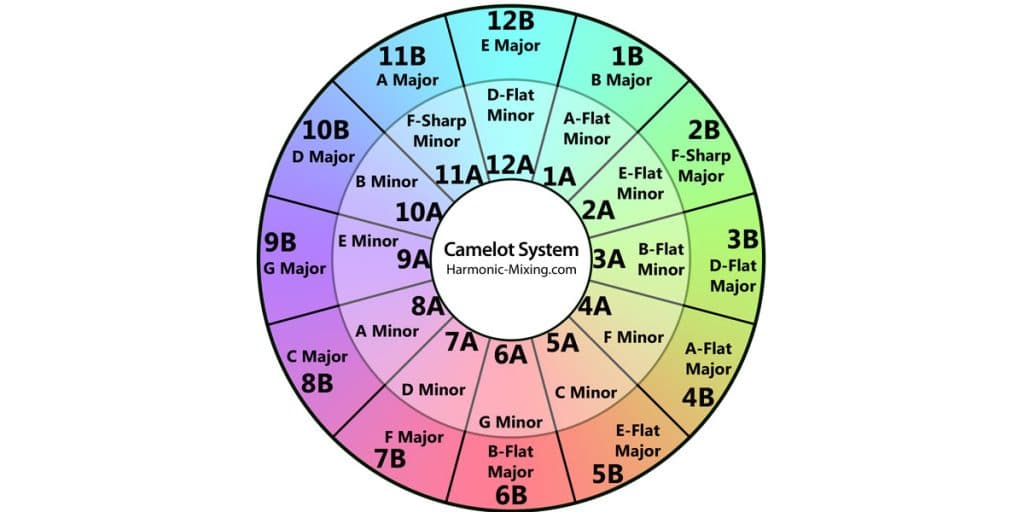
After detecting keys, DJs use the Camelot Wheel to find compatible matches quickly. The Camelot Wheel is a circle with keys arranged in a way that shows which keys go well together.
For example, if your current track is in 8A (A minor), the Camelot Wheel shows that 7A, 9A, and 8B are good next choices. Moving to these keys keeps the mix sounding smooth and pleasant.
DJs also experiment by moving clockwise or counter-clockwise around the wheel. This makes the DJ set feel fresh and dynamic. Sometimes, mixing a bit outside the usual keys can create special effects, like a surprising mood change—but DJs should use this carefully.
For instance, mixing from 8B (C major) to 5A (C minor) switches from a major to a parallel minor key. This creates a dramatic mood shift, which can energize or calm the audience depending on how it’s used.
Real-World Example: A DJ Set Using Harmonic Mixing
Imagine a DJ starting a set with a track in 6A (F minor). Using their software, they see that 5A (D# minor) and 7A (G# minor) are harmonically compatible keys. They play the 6A track, then smoothly transition to a 7A track by matching the beat and key.
Next, the DJ decides to raise the energy by moving two semitones up on the keyboard scale, from 7A to 9A (B minor). This “energy boost” technique creates excitement on the dance floor because the melody feels brighter and faster.
To keep things interesting, the DJ might later choose a track in 8B (C major) for a fresh sound, moving diagonally on the Camelot Wheel. This jump works well if the melodies are simple and don’t clash.
Throughout this set, the DJ uses key detection software to label tracks beforehand and organizes them by key. This preparation lets them focus on reading the crowd and adding effects rather than worrying about clashing notes.
Practical Tips for DJs Using Harmonic Mixing and Key Detection
- Label Your Tracks: Use software to tag each song with its key. This makes it easy to choose compatible tracks during a live set.
- Check Key Consistency: Sometimes the same song might show different keys on different files. Trust software but also use your ear to confirm.
- Use the Camelot Wheel: Keep a printout or app of the Camelot Wheel handy. It helps you pick the next song quickly based on harmonic compatibility.
- Try Energy Boosts Carefully: Moving up two semitones on the Camelot Wheel can raise energy. Use it for quick effects, but avoid long blends here because the melodies might clash.
- Experiment with Parallel Keys: Mix between major and minor keys of the same root note for emotional shifts. For example, go from 8B (C major) to 5A (C minor) to create mood changes.
- Practice Listening for Key Clashes: Develop your ear to notice when songs clash. This skill helps when software results are unclear or when you want to break traditional mixing rules.
- Lock the Key in Software: Many DJ programs let you lock the key to prevent pitch changes messing with harmony when you adjust BPM.
Advanced Scenario: DJ Software Automating Harmonic Mixing
Modern DJ software like DJ.Studio can automatically detect keys and arrange songs in the perfect order for harmonic mixing. You import your tracks, and the program sorts them so the next song always fits harmonically.
This automation helps DJs focus more on crowd energy and effects without worrying about key clashes. The software even considers tempo and energy level to build logical progressions across the set.
For example, a wedding DJ might use this feature to prepare an all-night playlist. The tracks flow smoothly from one to the next in key, even as the tempo and mood gently build or cool down, keeping the dance floor lively and happy.
Even with this technology, smart DJs customize transitions using filters, echoes, and EQs. The tool is powerful, but the DJ’s creative choices make the set unique.
Summary of Core Points in Harmonic Mixing and Key Detection
- Detecting the key is the first step. Use good software but double-check your results by ear.
- The Camelot Wheel visually maps keys to find compatible mixes easily.
- Practice different key transitions, like moving one step on the wheel or switching between major and minor keys, to create mood changes.
- Prepare your playlist with labeled keys to save time and focus on performance during gigs.
- Use modern DJ software’s automatic harmonic mixing features to get fast, smooth sets with less manual work.
Energy Levels and Track Dynamics
Have you ever noticed how some songs make you want to dance hard, while others calm you down? This happens because of the song’s energy and dynamics. For DJs, controlling these is like being a captain steering a ship through waves. The waves here are the changing energy levels in the music that move the crowd.
Energy in music is the feeling of power, excitement, or calm it gives. Dynamics are how this energy changes over time inside a track or between tracks. A good DJ mix rides these waves to keep the crowd excited but also let them rest.
1. Using Energy Levels to Shape Your Set
Think of energy like the volume of action in a track. High energy means fast beats, strong bass, and lots of sounds that make people move. Low energy means slower rhythms, softer sounds, and simpler beats that give the crowd a break.
Example: You might start with a chill track that has a smooth, steady beat. This warms up the crowd without pushing them too hard. Then, you slowly move to songs with faster beats and more instruments. This builds energy step by step. Later, you bring the energy down during a breakdown or softer song so dancers can catch their breath.
This rise and fall of energy keeps the dance floor alive. If a DJ plays all high-energy songs with no break, the crowd will get tired fast. If the DJ only plays low-energy songs, the crowd might not dance much. The trick is to mix these well.
Practical Tip: Organize your playlist by energy levels. Group songs as low, medium, or high energy. Use low energy songs for warm-ups or cool-downs. Use medium and high-energy songs to build momentum and peak moments. This helps plan the flow before you start.
2. Mixing Track Dynamics for Smooth Energy Flow
Track dynamics are about how loud and busy the music feels at different moments. Some parts of a song might be calm and simple, while others have strong beats and layers of sound. DJs use these dynamics to move energy up or down smoothly.
Example: Imagine a song that starts with a quiet intro, then builds to a powerful drop, followed by a softer breakdown. When mixing, a DJ can let the breakdown play fully before bringing in the next song. This gives the crowd a moment to rest. Then, the DJ mixes into the next track's high-energy part to bring the energy back up.
Playing a breakdown over another breakdown can make the floor feel flat and tired. Mixing a high-energy part into a low-energy intro can feel like a sudden stop that confuses the crowd. Knowing how to match these parts keeps the energy wave smooth.
Practical Tip: Pay attention to song sections when mixing. Let breakdowns play fully to give rest. Mix from high-energy sections to other high-energy parts, not to quiet intros. This keeps the energy consistent and the crowd engaged.
3. Creating Energy Density Through Layering and Timing
Energy density means how full or packed a mix sounds at a given time. You can control density by how you layer tracks and when you bring the next song in.
Example: If you start the next track early, while the first track is still playing, the mix sounds denser and more exciting. This overlap adds layers of rhythm and melody. But if you wait too long or start the next track too late, the mix feels empty, and energy drops.
Also, matching the drum sounds or rhythms of two tracks can increase energy. For example, mixing a track with tribal drums into another that has conga beats keeps the rhythm strong and builds excitement.
On the other hand, if two tracks clash in rhythm or timing, they create a weak or messy sound. This ruins the energy and confuses the dancers.
Practical Tip: Use precise timing to start the next track. Experiment with layering drums or vocals that fit well together. Practice syncing beats in the same phase so the drums hit together perfectly. This creates a tight, energetic mix that feels much fuller than playing songs back to back.
Case Study: Managing Energy at a Dance Party
Imagine you are the DJ at a wedding party. The crowd starts slow, chatting and getting comfortable. You begin with low-energy tracks, soft and simple. Then, you move to medium-energy songs with steady beats and some vocal hooks. The dance floor slowly fills as energy builds.
When more people join the floor, you play high-energy tracks with fast tempo and big drops. The crowd dances hard. After a while, you play a breakdown with a soft beat and a calm melody. This gives the dancers a breather and time to chat or grab a drink.
You then mix into another high-energy song smoothly by timing the mix during a build-up section, keeping excitement going. The dance floor stays packed because you carefully control the energy ups and downs.
Additional Tips to Control Energy and Dynamics
- Plan your main energy moments: Pick 2–3 big songs that will be the peak of your set. Build up to these and bring the energy down after to create contrast.
- Use looping on breakdowns: Loop a soft part to extend the rest time. This helps prepare for a smooth transition.
- Apply effects sparingly: Effects like filters or delays can build energy or create tension. Use them to gently raise energy but don't overdo it, as it can distract from your mix.
- Watch the crowd: If energy seems low, bring in a surprise high-energy track or layer vocals to lift the mood. If the crowd looks tired, fade to a softer track for rest.
Energy levels and track dynamics are key tools for DJs. Controlling them well makes your sets exciting, smooth, and keeps the crowd dancing longer. Think of your set as waves on an ocean—sometimes high, sometimes low, always moving in a way that feels natural and fun.
Recognizing Breakdowns and Build-Ups
Have you ever felt a song suddenly slow down or change before the beat drops back in? That moment is often a breakdown or build-up in the music. Understanding how to spot these parts helps DJs mix tracks smoothly and keep the crowd energized.
Think of a breakdown and build-up like the calm before a storm and then the storm itself. The breakdown is the quiet time, and the build-up is the energy growing until the big drop.
1. Spotting the Breakdown
A breakdown is a part of the song where the music pulls back. The heavy sounds go away, leaving simple or soft elements. This can be just a few instruments or even silence. The goal is to give listeners a rest and create contrast with the loud parts.
For example, in many EDM tracks, right after a loud, exciting drop, the track will enter a breakdown. Here, you might hear gentle pads, light percussion, or a soft synth melody. The kick drum often stops. This quiet moment helps the crowd breathe before the next intense section.
One practical way DJs recognize a breakdown is by listening for the absence of the main rhythm drums. If the kick drum drops out for 8 or 16 bars, that’s a good sign a breakdown is happening. The music feels less busy or more spacious. This gives DJs a natural moment to switch tracks or add effects.
Another clue is the change in atmosphere. During a breakdown, producers often add special sound effects like echoes, reverb, or filtered noise. These create a dreamy or tense feeling. When you hear these effects alongside fewer beats, you can be sure it’s a breakdown.
Here’s a real-world example: In a popular trance track, the breakdown starts by pulling away the bass and drums. A soft piano plays a few notes with lots of echo. This quiet moment lasts 16 bars. DJs use this to prepare the crowd for the return of the beat.
2. Recognizing the Build-Up
After the breakdown comes the build-up. This part raises the energy little by little. The main goal is to get the crowd ready for the drop, which is the track’s biggest moment.
Build-ups usually start with simple sounds and then add more layers. For example, you might hear rising synth tones, fast drum rolls, or snare fills that speed up. These sounds create tension—a feeling that something big is about to happen.
DJs look for increasing intensity in the music to spot the build-up. The beat might get faster, or volume might slowly rise. High-pitched risers that climb in pitch and noise sweeps are common build-up sounds. These guide the listener’s attention toward the drop.
For example, in a house music track, the build-up lasts 8 bars. The snare drums start softly on every second beat and get louder and faster. At the same time, a rising synth sweeps from low pitch to high pitch. This signals the crowd that the drop is near.
A practical tip for DJs: When you hear the drum pattern change to faster hits or hear the pitch rising, prepare to bring in your next track or create a special effect. You can even add your own drum roll or filter sweep to boost the tension yourself.
3. How Breakdowns and Build-Ups Help DJ Mixing
Knowing when a track is in a breakdown or build-up helps you plan your transitions. These sections often have predictable lengths, like 8 or 16 bars. This makes it easier to count and match with another track.
For example, if you know a breakdown is 16 bars, you can start mixing in the bass or beat of your next song gradually during that time. This keeps the flow smooth and stops the energy from dropping too much.
Some DJs use the breakdown as a moment to change the mood. They might add special effects or even talk on the mic if the crowd is ready for a change. The quieter part is perfect for these moments without disturbing the music flow.
Build-ups are useful for creating excitement. When you reach the build-up, you can use your DJ gear to slowly raise the volume, add effects like echo or reverb, or start increasing the tempo if your setup allows. This helps keep the crowd hyped up.
A common DJ technique is using a "roll" effect during the build-up, where a short section of drums repeats quickly to increase tension. This can be done with hardware or DJ software. Using rolls on vocal loops or drum hits during build-ups keeps listeners focused and excited.
Practical Tips for Recognizing and Using Breakdowns and Build-Ups
- Listen for changes in drums: Breakdowns usually lose the kick drum and main rhythm, while build-ups add faster snare rolls or risers.
- Count bars carefully: Most breakdowns and build-ups last 8 or 16 bars. Practice counting beats to know when to start mixing.
- Notice sound effects: Echo, reverb, filtered noise, and rising synths often signal breakdowns or build-ups.
- Watch track energy: Breakdown energy drops. Build-up energy rises. Use this to plan when to fade out or bring in new tracks.
- Use visual aids wisely: Waveform displays can help spot quiet breakdowns and fast build-ups but don’t rely only on them. Trust your ears.
- Practice with sample tracks: Pick songs you know well and practice identifying when breakdowns and build-ups happen. This trains your ear for live DJing.
Case Study: DJ Mixing a Trance Track
Imagine you are mixing a trance track with a long breakdown of 16 bars. The beat drops out, and you hear soft pads and atmospheric sounds. You recognize the breakdown and start fading in the bassline of your next track slowly.
As the build-up begins, the snare hits speed up. You add a roll effect using your DJ controller. The volume slowly rises, and you gradually bring in more of your next song’s drum patterns. By the time the drop hits, both tracks are perfectly synced, creating a smooth and exciting transition that keeps the crowd moving.
Case Study: House Track Build-Up and Breakdown
In a house track, the breakdown lasts 8 bars with a simple melody and fewer drums. You notice the drop in energy and prepare to add a vocal loop from your next track on a one-beat roll.
During the build-up, the riser synth climbs in pitch while snare drums increase in speed. You apply a low-pass filter on the outgoing track and slowly open it up. This creates tension listeners feel right before the big drop. Your timing is perfect, and the crowd cheers as the energy returns.
Identifying Musical Bridges and Drops
Did you know that musical bridges and drops are like special doors that change the mood in a song? For DJs, spotting these moments is very important. It helps you mix songs smoothly and keep the crowd excited.
Think of bridges and drops as the two big surprises in music. They shift the energy or tell a new part of the story. Let’s take a close look at how to find them and use them in your DJ mixes.
1. Spotting the Drop: The Energy Explosion
The drop is the loud, exciting part in dance and electronic music. It usually comes after a build-up or a break where the music pulls back. When the drop hits, the beat and bass come back strong and full of power. This is the moment the dance floor really moves.
Here’s how to spot a drop:
- Listen for silence or fewer sounds just before it: Drops often follow a quiet part, like a breakdown. This quietness builds tension.
- Notice the sudden return of bass and drums: When everything jumps back in, that’s likely the drop.
- Watch the energy level: The drop is usually the highest energy part of the song. The beat becomes stronger, and new sounds may appear.
Example: In a techno track, you might hear a few bars where the drums stop and only a soft melody plays. Then suddenly, the heavy kick drum and bass line come back with full force. That moment is the drop.
Practical tip: To practice, listen to your favorite dance tracks and mark the bar where the bass and beat suddenly come back after a quiet section. Use this as your cue to mix in or out of a track.
2. Recognizing the Bridge: The Song’s Pause Button
The bridge is like a short trip away from the main song parts. It changes the music so listeners get a break before returning to familiar sounds. Unlike a drop’s explosion, a bridge is usually softer or different, offering contrast.
Here’s what to look for in a bridge:
- New melody or sounds: The bridge often has different notes or instruments than the rest of the song.
- Usually only appears once: Most songs have just one bridge, making it a special moment.
- Change in energy: It might feel calmer or more relaxed compared to chorus or drop sections.
Example: In an EDM song, after the second chorus or drop, the music might strip down to simple synths or a smooth melody. The beat may slow or change. This section is the bridge, giving the listener a quick rest.
Practical tip: When mixing, use the bridge to switch songs. Since the music is different and often quieter, it’s easier to slip in another track without clashing sounds.
3. How to Use Bridges and Drops in DJ Mixing
Knowing where bridges and drops are helps you time your mixes well. The goal is to keep the music flowing without awkward changes or losing energy. Here are step-by-step ways to work with them:
- Map the song: Listen to your tracks and note where bridges and drops happen. Write down bar numbers if that helps.
- Plan your transitions: Mix into a new song during a bridge for a smooth start, or hit the drop with a new track’s drop to keep the energy high.
- Match phrases: Align the drop of one song with the drop of the next. This makes the crowd feel the energy stay strong.
Case study: Imagine a DJ mixing two house tracks. Track A has a drop at bar 48 and a bridge at bar 64. Track B’s drop starts at bar 16. The DJ waits for the bridge in Track A, begins Track B gently during this calmer part, and then mixes both tracks together so the drops hit at the same time. This alignment keeps the excitement high and the transition seamless.
Another example: If a hip-hop track has a vocal bridge with no drums, a DJ might mix in an electronic track’s intro here. Since the bridge is a quieter place, the new song can enter softly, building up to its own drop later.
4. Practical Tips for Identifying Bridges and Drops
- Use your ears: Listen for shifts in instruments, volume, and energy. Drops often feel like a big “boom,” and bridges feel like a quiet or different break.
- Count bars and phrases: Bridges and drops often last 8, 16, or 32 bars. Knowing these lengths helps you plan your mixes.
- Check for repeated patterns: Drops repeat powerful beats or melodies, while bridges introduce new parts or less busy arrangements.
- Watch the crowd: When you test mixes live, see how the crowd reacts to bridges and drops. This feedback helps you learn which moments to use for mixing.
Scenario: A DJ notices the crowd slows down during a long break but jumps again right at the drop. The DJ makes a mental note to start mixing in new songs just before or at the drop to keep energy high.
5. The Bridge and Drop Connection in Different Genres
Not all music uses bridges and drops the same way. Understanding genre differences helps you spot them better.
- EDM and House: These often have clear drops and usage of bridges as a break or build-up. Drops are long and energetic; bridges offer rest.
- Pop and Hip-Hop: Bridges may include a different melody or vocal style and usually come before the last chorus. Drops might be less dramatic or replaced by a chorus.
- Techno and Tech House: Less clear breaks between bridges and drops. Instead, energy changes gradually. Look for subtle shifts in rhythm or melody for bridge-like sections.
Example: In a pop song, the bridge often changes the lyrics and melody briefly before the final chorus. In contrast, a trance track’s drop will be a powerful bass and beat section after a long build-up.
Summary of Key Points
- Drop: High-energy moment after a build-up or break. Spot it by sudden return of bass and beat.
- Bridge: Unique, usually softer section that appears once. It offers contrast and prepares for the next big part.
- Use them for mixing: Transition during bridges for smooth entries; match drops for high-energy blends.
- Listen and count: Identify bars and phrasing around these sections to plan mixes better.
Practical Exercises in Song Analysis
Have you ever thought of a song like a puzzle waiting to be solved? Doing practical exercises to analyze songs helps you find all the important pieces. For a DJ, this means knowing exactly when and how to mix tracks smoothly during a set.
In this section, we will explore key exercises that build your skill in analyzing songs deeply. These exercises focus on listening closely and breaking down the music to prepare you for better mixes and playlist building.
1. Detailed Listening and Labeling of Sections
One of the best ways to get better at song analysis is to listen to a song multiple times and label its parts clearly. You can do this with pen and paper or using software that shows waveforms and song structure.
- Step 1: Play a track and write down where the intro, verse, chorus, bridge, drop, and outro start and end. For example, listen to a dance track and mark that the intro is from 0:00 to 0:30, the first verse is 0:30 to 1:00, and so on.
- Step 2: Note the changes in energy or instruments at these points. Maybe the chorus has more percussion or the bridge brings in new sounds.
- Step 3: Replay the track and confirm your labels. Make sure the changes feel clear and match what you wrote.
This exercise trains your ear to spot transitions and phrasing clearly. For example, a DJ mixing two songs can then choose to mix right at the start of a chorus or before a drop to keep the crowd excited.
Real-world example: Try analyzing a popular house music track. Notice how the energy builds in the intro, the bass drops in the chorus, and the outro eases the energy down. Label these precisely.
2. Phrase Matching Practice
Phrasing is how music is organized in groups of bars or beats, usually in 8 or 16 bars sections. Mixing two tracks at the right phrase points makes the transition sound natural and smooth.
- Step 1: Pick two songs you want to mix.
- Step 2: Count the bars as you listen and find the start of phrases. Mark these points on both songs.
- Step 3: Practice queuing the second track to start exactly at the beginning of a phrase in the first track’s phrase.
- Step 4: Try mixing these together, listening for smooth transition without clashing beats or sounds.
This practice will help you understand timing better and avoid abrupt or awkward mixes. DJs who master phrase matching keep the energy flowing and listeners engaged.
Real-world example: A beginner DJ mixing two techno tracks might find the phrases easier to count because of steady beats. Matching phrases lets them blend the songs so the crowd doesn’t feel a sudden shift.
3. Analyzing Key and Mood Changes
While harmonic mixing is discussed elsewhere, a practical exercise in song analysis is to listen for changes in key or mood inside a song itself. DJs can use this knowledge to predict the best points to add effects or change tracks.
- Step 1: Listen to a track and note any sections where the mood changes. For example, a bright chorus vs. a darker verse.
- Step 2: Try to identify any key changes or shifts in melody, if you can hear them.
- Step 3: Mark these points and imagine how these changes could be used in a mix, for example, starting a new song as the mood shifts.
This exercise deepens your sense of musical storytelling. It helps you build sets that feel like a journey rather than a random list of songs.
Real-world example: A DJ playing a festival set might use mood changes to decide when to bring down the energy for a cool-down or build it back up for a peak moment.
4. Creating and Testing Mini Sets
Analyzing songs in groups is just as important as looking at one song alone. Creating mini sets lets you practice how songs flow together based on your analysis.
- Step 1: Choose 3 to 5 songs that you think could work well together. Use your labeled sections and phrase markings from earlier exercises.
- Step 2: Arrange the songs in different orders and test transitions between each pair.
- Step 3: Record your mini set and listen back carefully. Note where transitions sound weak or awkward, and why.
- Step 4: Adjust your order or change transition points based on your notes, then try again.
This practical exercise teaches you how to spot strong transitions and improve your set flow. It also builds your confidence in choosing tracks that fit well together.
Real-world example: A DJ preparing for a small club gig might spend time creating mini sets to fit different times of the night, like warm-up, peak, and cool-down segments.
5. Blind Song Analysis Challenge
To sharpen your ear, try a blind song analysis challenge. This means listening to a track without looking at any software or waveforms and trying to analyze it by ear alone.
- Step 1: Pick a track and mute or cover waveform displays.
- Step 2: Listen for intros, verses, choruses, breaks, and drops. Try to mark their timings mentally or jot down rough guesses.
- Step 3: Uncover the waveform and compare your analysis with the visual markers. Notice where you were correct and where you missed details.
- Step 4: Repeat with other songs to improve your listening skills.
This exercise helps you rely more on your ears and less on visual aids, which is critical when mixing live without internet or software.
Real-world example: During a live set, your screen might freeze or lag, so being able to analyze music purely by listening keeps your performance smooth and professional.
Tips for Effective Song Analysis Practice
- Use good headphones: Clear sound helps you hear details better.
- Take notes: Writing helps you remember song parts and plan mixes.
- Practice regularly: Daily short sessions can improve your ear faster than long, rare practices.
- Ask for feedback: Share your mini sets or analyses with friends or mentors and get their opinions.
- Record your mixes: Listening back lets you catch mistakes or spot smart moves you made.
Case Study: Applying Song Analysis in a Live Gig
Sarah, a beginner DJ, prepared for her first club gig by doing these exercises. She picked five songs, labeled their sections, counted phrases, and noted mood changes.
During her set, Sarah used this knowledge to know exactly when to bring in the next track. She started mixing at the beginning of each phrase, avoided clashing moods, and used breaks to add effects.
Her transitions sounded smooth, and the crowd stayed dancing without sudden drops in energy. After the gig, she recorded her set and listened back, identifying two spots where she could improve phrasing for next time.
By practicing song analysis exercises before the gig, Sarah gained confidence and performed better than she expected.
Try applying this approach to your own practice. Analyze, test, and refine to make your DJ sets flow like a well-told story.
Building Your DJ Skills with Music Structure and Theory
Mastering music structure and theory is a key step for any DJ wanting to create seamless, energetic, and memorable sets. By understanding the basics of beats, bars, and phrasing, you gain control over timing, helping your mixes flow naturally without awkward jumps.
Knowing about tempo, BPM, and time signatures lets you match tracks that sit well together in speed and rhythm. This keeps the dancefloor moving and prevents sudden changes that might throw off the vibe. Using technology to detect keys and applying harmonic mixing techniques ensures your tracks sound good together harmonically, avoiding clashing notes and creating rich musical blends.
Recognizing different song sections — intros, verses, choruses, bridges, and outros — equips you to plan your mixes with intentional energy changes. When combined with the ability to spot breakdowns, build-ups, and drops, you can expertly guide crowd emotions, building excitement and easing tension at just the right moments.
Managing energy levels and track dynamics lets you craft your DJ set like a story, with highs and lows that keep the crowd engaged and energized without fatigue. Layering tracks carefully and timing transitions sharpens the feeling of fullness and excitement on the dancefloor.
Most importantly, practicing song analysis builds your confidence and sharpens your ears. Labeling sections, counting phrases, and exploring mood changes prepares you for real-world DJing challenges. Whether you’re mixing at a small party or a big event, these skills help you react quickly, adapt to your audience, and keep your performance smooth and professional.
As you continue your journey, remember that great DJing is both a science and an art. The music theory knowledge gives you the tools and foundation, while your creativity and reading of the crowd bring your sets to life. With steady practice and attention to music’s structure, you’ll stand out as a DJ who knows how to make every track fit perfectly, every transition exciting, and every crowd ready to dance.
Lesson Audio